
Authentication is no longer a back-burner compliance concern; it’s now a main driver for expansion, confidence, and digital reach. How organizations confirm client identities now dictates how quickly they can bring users onboard, how safely they can operate, and how assuredly they can enter new territories.

This is why video-based Know Your Customer (KYC) has evolved from a temporary fix to a fundamental strategic element. Initially appearing out of necessity during the pandemic, it has since morphed into a game-changing capability that merges security with ease of use. By converting what was previously a paper-intensive, lengthy procedure into a smooth, digitally-focused interaction, video KYC is not just cutting expenditures but is reshaping user expectations.
The increasing trend is clear. Consumers require verification that feels immediate yet dependable. Oversight bodies are establishing guidelines that favor digital readiness and record-keeping. Technology itself is raising standards, as AI and biometrics introduce intelligent layers capable of detecting deception instantly while still fostering a hassle-free experience.
The outcome is a significant transformation in identity handling by 2025. Verification moves beyond simply meeting requirements; it’s about enabling expansion without sacrifice. Firms that grasp this are finding that video KYC is more than just a mechanism to fulfill mandates, it’s a source of competitive edge. Those who hold onto outdated, manual techniques risk being bypassed as identity becomes a crucial factor for velocity, public perception, and market relevance.
2025 is the moment when video KYC switches from a procedure to a powerful asset, shifting from back-office adherence to the forefront of growth initiatives.
In the chapters ahead, we will unpack the forces shaping this identity shift, explore market signals from across geographies, and examine the strategies institutions are using to turn compliance into a competitive edge. Video KYC will be our lens but the story is about something bigger: the reinvention of trust in the digital age.
The Great Identity Shift: Forces Reshaping Verification
The Forces Reshaping Identity Verification

Identity verification is no longer a compliance checkpoint. It has become a core driver of trust, customer experience, and digital growth. Four forces are accelerating the shift toward Video KYC and intelligent verification.
Regulatory Accelerators
Regulators worldwide are formalising digital identity frameworks. RBI and SEBI have established Video KYC as a compliant onboarding method, while initiatives such as eIDAS 2.0, AUSTRAC guidelines, and enhanced US due diligence requirements are raising expectations around remote verification. Video KYC has emerged as a preferred model because it combines security, auditability, and scalability.
Privacy First Expectations
Regulations such as GDPR, India’s DPDP Act, and CCPA are increasing scrutiny around data usage and consent. Video KYC supports this shift through secure interactions, explicit consent capture, and transparent audit trails, helping organisations balance compliance with customer trust.
Technology Convergence
AI, machine learning, biometrics, liveness detection, and blockchain are transforming identity verification into an intelligent trust framework. Modern Video KYC solutions can automate face matching, detect anomalies, assess risk in real time, and apply additional verification dynamically, improving both speed and accuracy.
Changing Customer Behaviour
Customer patience is shrinking. The World Bank’s Global Findex research shows that digital financial interactions have become mainstream globally, raising expectations for fast, seamless onboarding and verification experiences.
The Bigger Picture
Together, these forces are transforming verification from a regulatory requirement into a strategic capability. Video KYC sits at the centre of this shift because it delivers compliance for regulators, convenience for customers, and scalability for organisations. Institutions that can verify identity quickly, securely, and transparently will be best positioned to compete in an increasingly digital economy.
Why video KYC matters

The significance of video KYC lies in its ability to balance three competing priorities:
- Regulatory compliance – It meets stringent KYC and anti-money laundering requirements by combining human oversight with digital auditability.
- Customer experience – It removes friction from onboarding, reducing drop-offs and improving satisfaction.
- Operational efficiency – It eliminates physical overheads such as branch visits, manual document handling, and paper storage.
This three-way balance explains why video KYC has become the preferred model for banks, fintechs, insurers, and other regulated entities that must onboard customers quickly while staying compliant.
The new face of video KYC today
The evolution of video KYC has been about more than compliance. Today, it is seen as a strategic enabler. Organisations are no longer asking whether they should adopt it but how they can optimise and differentiate with it. Some of the most important characteristics of modern video KYC include:
- Scalability – Platforms can handle thousands of verifications daily without bottlenecks.
- Embedded intelligence – AI continuously improves fraud detection, anomaly spotting, and process automation.
- Global adaptability – Video KYC can be configured to meet the specific regulatory requirements of multiple jurisdictions.
- Customer trust factor – The human element of video reassures customers in ways that fully automated solutions often cannot.
What the evolution tells us
The journey of video KYC shows how compliance and customer experience no longer need to be trade-offs. By combining human oversight with intelligent automation, organisations have unlocked a model that meets regulators’ needs while exceeding customer expectations.
It also demonstrates how identity verification has shifted from being a static one-time event to a continuous trust relationship. As AI and video technologies continue to evolve, verification will become even more adaptive, invisible, and user-centric.
Looking ahead
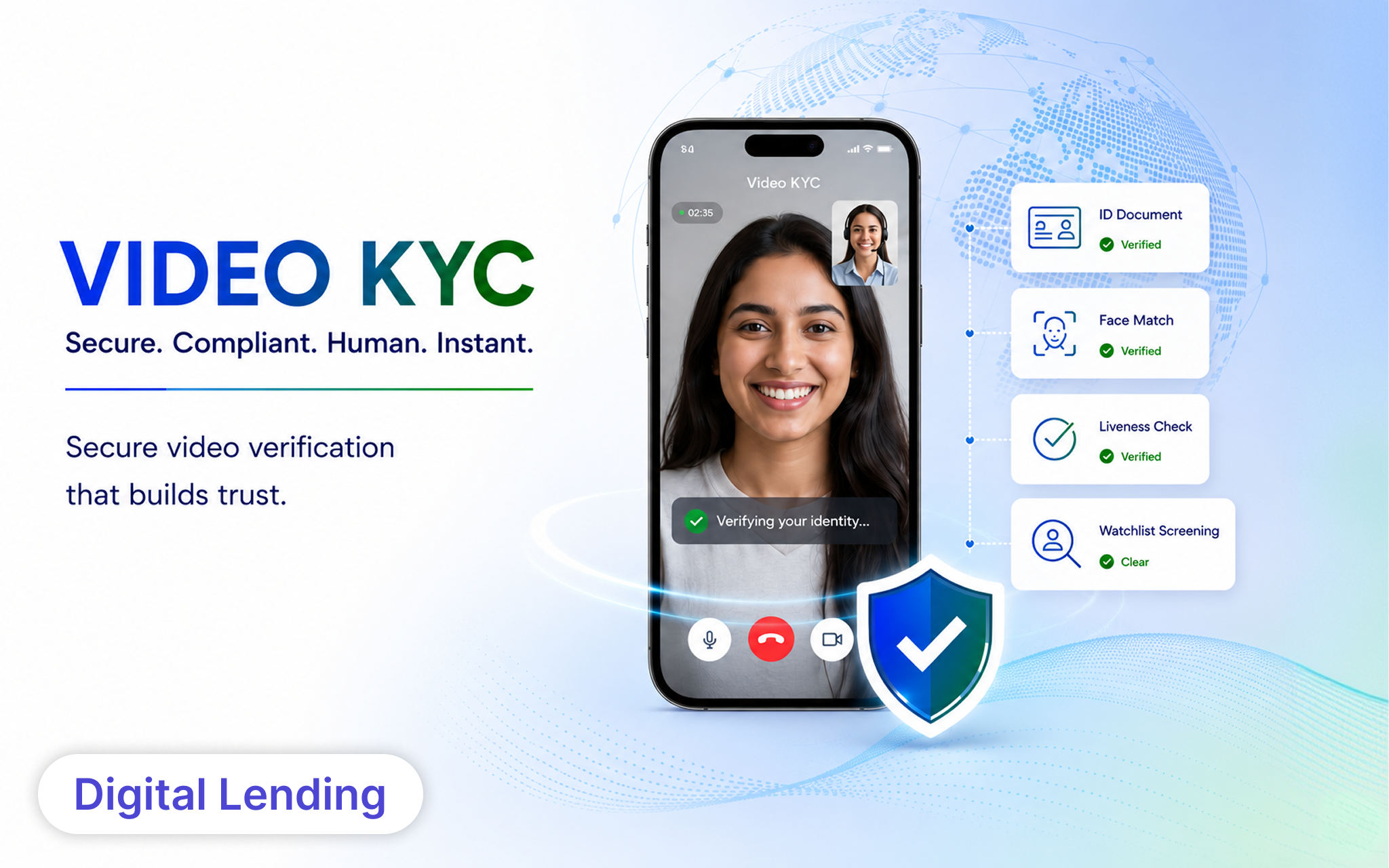
The fundamentals of video KYC remain the same — verify documents, match faces, confirm liveness, ensure compliance. But its role has evolved from being a regulatory checkbox to becoming a core enabler of digital trust ecosystems.
As financial services and digital platforms expand across borders, video KYC will not just be about faster onboarding. It will underpin global interoperability, support digital identity wallets, and strengthen the trust infrastructure of the digital economy.
The story of video KYC is still unfolding. What is clear, however, is that it has already reshaped the fundamentals of identity verification and will continue to do so as customer expectations, regulations, and technologies advance in the years ahead.
Market Signals & Hot Topics in CXO Discussions

Identity verification has left the compliance back office and taken centre stage in boardroom conversations. What used to be a regulatory obligation is now a driver of customer trust, market expansion, and competitive edge. The conversations are no longer about whether to invest in digital KYC but how to align it with broader corporate strategy, risk appetite, and long-term growth.
The Balancing Act: Speed, Security, and Cost
One of the most animated debates in banking boardrooms today is around balancing speed, security, and cost. Customers expect onboarding journeys to be instant and intuitive, regulators demand rigour, and CFOs want operating expenses under control. Rarely do these priorities align neatly.
For CXOs, this debate is not about choosing one over the other, but about designing an identity framework that optimises all three. Automated decisioning, biometric verification, and AI-powered fraud detection help cut costs and increase speed, but each comes with investment implications and reputational risks if not deployed carefully. The trade-offs are becoming more visible, and every leadership team is being forced to make conscious choices about how much friction to introduce, how much spend to allocate, and how much residual risk to tolerate.
Cross-Border KYC: The Next Frontier
As banks and fintechs expand across geographies, cross-border KYC interoperability has emerged as a hot topic. Regulators in different markets interpret compliance differently, what is acceptable in Singapore may not pass scrutiny in Europe, and what works in India may not align with U.S. expectations. For CXOs leading international portfolios, this lack of harmonisation is a serious operational and strategic headache.
At the same time, the opportunity is clear. The rise of globalised SMEs, migrant populations, and cross-border digital commerce is creating demand for portable digital identities and KYC frameworks that can scale across jurisdictions. Institutions that crack this problem whether through consortium-based utilities, blockchain-backed IDs, or common standards — will unlock growth while reducing duplication of effort. That makes interoperability one of the most closely watched signals in identity discussions today.
Vendor Consolidation and Platform Differentiation
In a market where dozens of vendors promise end-to-end KYC solutions, boards are increasingly focused on vendor consolidation and platform differentiation. The era of stitching together point solutions is fading. Financial institutions are asking whether their providers can scale with them, integrate with existing infrastructure, and remain flexible as regulations evolve.
For CXOs, this conversation is less about features and more about strategic bets. Do we anchor ourselves to a multi-capability platform and reduce vendor risk, or do we spread the risk across multiple partners but live with integration pain? How do we differentiate between a vendor that simply meets compliance requirements and one that becomes a true enabler of customer experience? These questions now shape vendor selection at the highest level, and boards are treating them as part of enterprise risk management, not just IT procurement.
ESG and Inclusion in Onboarding Strategies
Another signal reshaping identity verification strategy is the push to align onboarding with ESG and financial inclusion goals. Regulators, investors, and customers are scrutinising how inclusive banks are in their approach to KYC. Are rural populations, first-time borrowers, and digitally under-served communities able to access financial services with ease? Are verification methods designed with accessibility in mind, not just regulatory compliance?
From a CXO standpoint, ESG considerations have moved beyond sustainability reports into core business strategy. By adopting video KYC, document-lite verification, and multilingual support, banks can expand reach while aligning with inclusion commitments. This is not just about meeting ESG scorecards; it is about securing reputational capital and tapping into new customer segments.
Monetising Trust: The Hidden Opportunity
Perhaps the most interesting boardroom signal is the idea of monetising trust. Identity verification has traditionally been a cost centre — something banks must do to comply. But in a data-driven economy, KYC-generated insights are increasingly being seen as a value asset.
Boards are asking: Can verified identity data be leveraged to offer pre-approved loans, personalised insurance, or instant cross-sell opportunities? Can banks partner with telcos, e-commerce platforms, or fintechs to create ecosystem services rooted in verified trust? This line of thinking reframes KYC as more than a gatekeeping function; it becomes a foundation for new revenue streams. While this remains an emerging theme, it is gaining traction in forward-looking boardrooms.
AI Ethics and Trustworthiness
Alongside these core debates, there is growing unease around AI ethics in identity verification. CXOs are aware that while AI improves fraud detection and accelerates onboarding, it also introduces risks of bias, false rejections, and data misuse. Boardroom discussions are shifting from “Can AI help us?” to “How do we govern AI responsibly?” Institutions are exploring frameworks for explainability, bias testing, and third-party audits to ensure that identity systems remain fair, transparent, and trustworthy.
Customer Experience as a Competitive Differentiator
A further boardroom signal is the recognition that customer experience in verification is no longer a hygiene factor, but a differentiator. With challenger banks and fintechs offering frictionless onboarding, traditional institutions cannot afford to fall behind. CXOs are now comparing abandonment rates in onboarding journeys with revenue losses, treating identity verification UX as a revenue driver rather than an operational detail.
Ecosystem Partnerships and Future-Proofing
Finally, CXOs are discussing identity verification not as a standalone function but as part of a larger ecosystem play. Partnerships with fintechs, for regulatory technology, and industry utilities are seen as pathways to scale, innovation, and cost reduction. The strategic question in boardrooms is: should we build, buy, or partner to future-proof our identity stack?
The CXO Lens: Strategy, Not Just Compliance
When you zoom out, a clear picture emerges. The hot topics around identity verification are balancing speed and security, cross-border interoperability, vendor strategies, ESG, monetising trust, AI governance, customer experience, and partnerships — are all boardroom-level issues because they touch strategy, risk, and growth simultaneously.
For CXOs, identity verification is no longer an isolated compliance exercise. It is a strategic lever with direct implications for market expansion, competitive positioning, and enterprise value. The organisations that recognise and act on these signals will not only stay compliant but will redefine how trust is built, monetised, and scaled in the digital age.
Niche Use Cases and Sectoral Innovations for Video KYC

Video KYC has evolved far beyond retail banking. Today, organisations across financial services are using it to balance compliance, customer experience, and operational efficiency.
Retail Banking and SME Lending: Accelerates account opening and business onboarding through remote verification and digital document validation, helping institutions grow SME portfolios faster.
Digital Banks and Neobanks: Enables fully digital onboarding journeys with real time identity verification, reducing abandonment and supporting rapid customer acquisition.
Wealth Management and Investments: Combines strong compliance controls with premium client experiences through remote investor verification and fraud prevention.
Insurance: Streamlines policy issuance by replacing paper based verification with digital identity checks and document capture.
Cross Border Payments: Simplifies remote onboarding for migrant workers and international customers while supporting AML and customer due diligence requirements.
Corporate Banking and Trade Finance: Reduces onboarding timelines by enabling remote verification of directors, authorised signatories, and complex business entities.
Embedded Finance and Fintech Partnerships: Supports real time borrower verification within lending, BNPL, and partner ecosystems without compromising compliance. Institutions building these connected journeys can also evaluate AI-powered no-code digital lending solutions that bring verification, automation, and lending workflows together.
The common outcome across these sectors is clear: faster onboarding, lower operational costs, stronger fraud controls, and a significantly better customer experience. As digital onboarding becomes the norm, Video KYC is increasingly serving as the trust layer that enables institutions to scale securely and efficiently. For institutions connecting these capabilities across broader lending journeys, digital lending platforms for banks and credit unions provide a wider technology context.
The Modern Video KYC Stack: Technology Deep Dive

Video KYC in 2025 is no longer a standalone verification process. It is a layered technology stack designed to balance compliance, fraud prevention, scalability, and customer experience. The effectiveness of the stack depends not on individual components, but on how seamlessly they work together.
Video Infrastructure
Modern Video KYC platforms use adaptive streaming, quality monitoring, secure session recording, dynamic watermarking, and geo tagged audit trails to ensure reliable and tamper resistant identity verification across varying network conditions.
Document Intelligence
Advanced OCR engines do more than extract information. They validate identities by cross checking data points, analysing document integrity, and detecting signs of forgery through AI driven fraud detection techniques.
Liveness and Biometrics
As deepfakes and synthetic identities become more sophisticated, liveness detection has become essential. Modern systems combine facial biometrics, behavioural analysis, and AI based spoof detection to confirm both identity authenticity and continuity across future interactions.
Fraud Detection Engines
Traditional rule based checks are being replaced by adaptive fraud models that combine machine learning, device intelligence, behavioural analytics, watchlists, and external fraud networks. These systems identify emerging threats in real time rather than relying solely on predefined rules.
Workflow Orchestration
The orchestration layer acts as the control centre of the stack, coordinating video verification, document validation, biometric checks, and escalation workflows. Modern platforms allow institutions to configure policies, compliance rules, and jurisdiction specific requirements through no code interfaces. Institutions evaluating this approach can also explore no-code Video KYC solutions for examples of platforms designed for configurable digital verification workflows.
Security and Compliance
Every layer operates on a foundation of encryption, data residency controls, immutable audit trails, and automated compliance governance. Increasingly, institutions are adopting a compliance by design approach where policy updates can be implemented without disrupting operations.
Why It Matters
The future of Video KYC lies in modular, intelligent, and interoperable architectures. As regulators move toward digital identity ecosystems and customers demand frictionless onboarding, institutions need technology stacks that can adapt to new fraud patterns, compliance requirements, and verification models without requiring complete system redesigns.
In this environment, Video KYC is no longer just a compliance tool. A modern Video KYC platform has become strategic trust infrastructure that enables secure growth at scale.
Strategy Playbook: Designing a Future Proof Video KYC Program

Building a future ready Video KYC program requires more than deploying technology. Institutions need a strategy that balances compliance, customer experience, fraud prevention, and scalability while remaining adaptable to future change.
Make Compliance the Foundation
Regulations continue to evolve across markets, making flexibility critical.
- Design configurable workflows that can adapt to changing regulatory requirements.
- Support jurisdiction specific policies without rebuilding processes.
- Treat compliance as an enabler of trust and scale, not just a regulatory obligation.
Design Around Customer Experience
Verification should be secure, but it should also feel effortless.
- Enable onboarding from any device with minimal friction.
- Reduce repetitive document submissions and failed verification attempts.
- Provide guided, intuitive experiences that improve completion rates and reduce abandonment.
Build Multi Layered Fraud Defences
Fraud threats are becoming increasingly sophisticated.
- Combine liveness detection, biometric verification, and behavioural analytics.
- Use AI driven anomaly detection to identify emerging fraud patterns.
- Continuously strengthen controls as threat landscapes evolve.
Balance Automation with Human Oversight
The most effective programs combine efficiency with assurance.
- Automate routine verification and document checks.
- Escalate exceptions and high risk cases for manual review.
- Apply risk based verification journeys to improve both speed and accuracy.
Institutions can extend this approach into broader lending workflows by connecting Video KYC with automated underwriting software, allowing verified identity and risk signals to support downstream credit decisions.
Design for Scale
Verification frameworks should support future growth, not just current needs.
- Build for multiple geographies, languages, and customer segments.
- Enable integration with broader digital identity ecosystems.
- Ensure infrastructure can support increasing onboarding volumes without performance bottlenecks.
Create a Continuous Improvement Loop
Video KYC should operate as a living system.
- Monitor onboarding completion rates and verification times.
- Track fraud detection effectiveness and exception volumes.
- Use customer feedback and operational insights to refine journeys continuously.
The Strategic Objective
The strongest Video KYC programs do not treat compliance, fraud prevention, customer experience, and scalability as separate priorities.
They bring them together into a unified verification framework that enables faster onboarding, stronger trust, better risk management, and sustainable digital growth. At that point, Video KYC stops being a compliance process and becomes a strategic advantage.
Regional Regulations and Compliance Trends
Video KYC is no longer being judged on whether it is allowed. Regulators are now focused on how securely, transparently, and effectively it is implemented.
India: Scale with Supervision
India remains one of the most advanced Video KYC markets, with RBI, SEBI, and IRDAI supporting adoption across banking, insurance, and capital markets.
Key priorities include:
- Scalable SME and retail onboarding.
- Audit trails, consent capture, geo tagging, and liveness verification.
- Stronger supervisory oversight as adoption grows.
European Union: Privacy with Interoperability
Driven by GDPR, eIDAS 2.0, and AMLD6, the EU is balancing innovation with strict privacy standards.
Key priorities include:
- Cross border digital identity interoperability.
- Privacy by design and data protection.
- Stronger AML and customer verification controls.
United States: Innovation in a Fragmented Landscape
The US continues to operate through a mix of federal and state level requirements.
Key priorities include:
- FinCEN driven KYC and AML compliance.
- Flexible frameworks for varying state regulations.
- Growing adoption across digital banks and fintechs.
APAC and Emerging Markets: Inclusion Through Digital Identity
Markets across Southeast Asia, the Middle East, and Africa are accelerating remote onboarding initiatives.
Key priorities include:
- Expanding financial inclusion.
- Aligning with global AML standards.
- Balancing local compliance requirements with scalability.
What This Means for Institutions
The regulatory focus is shifting from permission to performance. Institutions that build compliance into their Video-based KYC strategy will be better positioned to scale onboarding, support cross border growth, and adapt to evolving regulatory expectations without increasing operational complexity.
Future Trends: 2025–2030 Horizon Scan
The world of digital identity is entering a new decade of transformation. What we are witnessing now is not just incremental progress in verification methods but the start of a systemic shift that will define how institutions authenticate and interact with customers in the years ahead. Between 2025 and 2030, several key trends will reshape the landscape each with distinct implications for banks, fintechs, insurers, and regulators.
The Rise of Reusable Digital Identities
For years, identity verification has been event-specific. Each time a customer applies for a loan, opens an account, or buys insurance, their identity is revalidated. This repetition drives up cost, creates friction, and frustrates customers. The next phase is reusable digital identities — portable credentials issued once and accepted across multiple institutions.
- Use Case: A retail customer who completes Video KYC at Bank A could reuse that verified digital ID when opening an investment account at Bank B or purchasing an insurance policy.
- Market Signals: The EU’s push with the European Digital Identity Wallet is a strong step in this direction, while India’s DigiLocker ecosystem shows how national frameworks can support reuse at scale.
- Strategic Implication: Institutions that integrate with reusable identity systems will cut onboarding times dramatically, reduce regulatory duplication, and boost cross-selling opportunities.
For years, identity verification has been event-specific. Each time a customer applies for a loan, opens an account, or buys insurance, their identity is revalidated. This repetition drives up cost, creates friction, and frustrates customers. The next phase is reusable digital identities — portable credentials issued once and accepted across multiple institutions.
- Use Case: A retail customer who completes Video KYC at Bank A could reuse that verified digital ID when opening an investment account at Bank B or purchasing an insurance policy.
- Market Signals: The EU’s push with the European Digital Identity Wallet is a strong step in this direction, while India’s DigiLocker ecosystem shows how national frameworks can support reuse at scale.
- Strategic Implication: Institutions that integrate with reusable identity systems will cut onboarding times dramatically, reduce regulatory duplication, and boost cross-selling opportunities.
AI-Powered Instant Onboarding
Speed has become the competitive differentiator in financial services. In markets where neobanks and fintechs can approve accounts in minutes, traditional institutions cannot afford to take days or weeks. AI-driven identity verification will enable real-time decisioning with near-zero manual intervention.
- Use Case: A small business applies for a credit line late at night. The AI stack instantly validates the business documents, authenticates the owner through liveness checks, and runs AML screening. The loan is approved before the next morning — without any human in the loop.
- Market Signals: We are already seeing regulators like the Monetary Authority of Singapore (MAS) and FCA in the UK supporting AI-assisted verification under strict explainability frameworks.
- Strategic Implication: Institutions that harness AI onboarding will gain speed-to-market advantages, particularly in SME and retail banking segments where customer patience is shortest.
Decentralised Identity Ecosystems (DID)
Centralised databases of identity are increasingly seen as single points of failure. A breach of one provider can expose millions of identities. Decentralised Identity (DID) frameworks, built on blockchain or distributed ledgers, give individuals control over their credentials, with institutions verifying authenticity through trust registries rather than holding raw data.
- Use Case: A gig worker in Southeast Asia uses a DID wallet to prove work history, creditworthiness, and KYC credentials to multiple lenders without sharing sensitive documents. Each lender verifies authenticity cryptographically, not by handling the underlying data.
- Market Signals: The World Bank’s ID4D initiative and pilots by companies like Microsoft’s Entra Verified ID are laying the foundation. Japan and Korea are already testing DID for cross-border travel and finance.
- Strategic Implication: Financial institutions adopting DID will improve privacy compliance, reduce data storage risk, and prepare for global interoperability where identities are verified across jurisdictions.
Voice Biometrics and Emotion Detection
Video and fingerprint authentication have become mainstream, but the next wave is voice-driven biometrics and even emotion-sensitive verification. With advances in natural language processing and affective AI, systems can detect stress, coercion, or impersonation attempts in real time.
- Use Case: During a Video KYC session, an AI model analyses the applicant’s speech patterns and emotional cues. If signs of duress or synthetic voice fraud are detected, the system triggers an escalation to a human reviewer.
- Market Signals: Banks in Latin America and South Africa are already deploying voice biometrics at call centres, while research labs are training models to detect deepfakes and coercion attempts in live conversations.
- Strategic Implication: Incorporating emotion-aware voice AI into verification flows can add a new layer of fraud defence without creating extra friction for genuine customers.
Quantum-Safe Verification Protocols
One of the least-discussed but most critical risks is the arrival of quantum computing. Within this decade, quantum systems could break widely used encryption methods, making today’s secure verification vulnerable. The financial industry must prepare for quantum-safe cryptography before the threat becomes real.
- Use Case: A global bank moves its Video KYC system to quantum-resistant encryption protocols, ensuring that sensitive identity data remains secure even if adversaries gain quantum capabilities.
- Market Signals: The US NIST has already standardised first-generation post-quantum algorithms, while the EU and APAC regulators are urging early adoption in financial infrastructures.
- Strategic Implication: Early movers in quantum-safe identity verification will be seen as leaders in security resilience, a factor that will increasingly influence regulator trust and customer confidence.
Pulling the Horizon Together
What ties these trends together is a fundamental shift: identity verification is moving from being a compliance obligation to becoming a growth enabler.
Reusable IDs open doors to seamless multi-product journeys. AI onboarding transforms speed-to-market. Decentralised ecosystems reduce systemic risk. Voice biometrics sharpen fraud defences. And quantum-safe protocols future-proof trust.
The institutions that treat these not as experimental pilots but as core strategies will lead the market between 2025 and 2030. For those that wait, the risk is not just compliance penalties but losing relevance in a financial ecosystem that prizes speed, trust, and global interoperability.
Executive Wrap Up: The Leadership Imperative
Identity verification has evolved from a compliance requirement into a competitive advantage.
Institutions that modernise verification can onboard customers faster, reduce fraud risk, strengthen compliance, and improve customer experience simultaneously. Those that rely on fragmented or manual processes risk higher abandonment, rising operational costs, and growing exposure to sophisticated fraud.
The next generation of leaders will treat verification as strategic infrastructure, embedding trust, speed, and security into every onboarding journey.
This is where platforms like ezee.ai’s identify.ezee play an important role. By combining Video KYC, AI driven verification, liveness detection, OCR, fraud checks, and audit ready compliance workflows in a single platform, institutions can scale onboarding while maintaining regulatory confidence and customer trust.
The mandate is clear: verification is no longer a back office function. It is a growth capability. Institutions that modernise it today will be better positioned to compete tomorrow.
Frequently Asked Questions
Video KYC is a real-time video call where an agent verifies customer identity by checking live documents and biometrics against records. Customers upload ID proofs like PAN beforehand, then show them on camera during a 5-7 minute session with facial matching and liveness checks. This fits seamlessly into digital loan onboarding, cutting physical branch visits.
Video KYC ensures compliant identity verification during onboarding without branch visits. It confirms details like address and PAN in real-time for loan applications or accounts, enabling instant access. RBI guidelines support this for faster TAT in lending flows.
| KYC Type | Core Mechanism | Speed | Fraud Resistance | Best For |
|---|---|---|---|---|
| Traditional KYC | In-person checks | Slow | High | High-risk profiles |
| eKYC | Aadhaar OTP | Instant | Medium | Small loans, volume |
| Video KYC | Live video biometrics | 5-7 min | Very High | High-value loans |
Yes, Video KYC secures onboarding with live facial recognition, liveness detection, and recorded sessions for audits. It blocks spoofing in loan KYC by matching video to ID photos, reducing fraud risks. RBI mandates geo-tagging for added compliance.
Modern solutions need AI facial recognition, liveness detection, OCR for docs, and API integrations for lending stacks. Include geo-tagging, session recording, and omnichannel support to handle high volumes without drop-offs. These scale for fintechs processing thousands of daily onboardings.
Evaluate based on RBI compliance, AI accuracy for fraud flags, and seamless LMS integration for underwriting flows. Prioritize low drop-off rates and audit-ready recordings, test with your loan volumes. Look for 90% automation to minimize agent costs.
Incomplete KYC blocks full account activation or loan disbursal per RBI rules. Limited services apply until verified, with sessions expiring in 3 days. This protects against fraud in credit journeys.
Video KYC takes 5-7 minutes live, plus prep uploads. AI handles 90% automation for instant decisions in loan apps. Agents available extended hours for quick TAT.
AI boosts accuracy with real-time OCR, facial matching, and liveness checks against deepfakes. It flags mismatches in credit bureau pulls during underwriting. This cuts manual errors by automating 90% of verifications.
Yes, via liveness detection analyzing blinks and movements against static spoofs. AI cross-checks with ID photos and bureau data for synthetic IDs in loan apps. RBI pushes these for robust fraud prevention.

