Omnichannel collections are changing how businesses approach debt recovery. For decades, debt recovery relied on a simple formula: make more calls, add more agents and increase follow-ups.
That approach is becoming increasingly difficult to sustain.

Borrowers today interact differently, making digital communication in debt collection increasingly important. They respond to WhatsApp messages between meetings, engage with app notifications during commutes and check emails at their convenience.
At the same time, collection leaders face growing pressure to reduce the cost of recovery, improve portfolio performance, strengthen compliance and preserve customer relationships. Modern collections must therefore evolve beyond traditional recovery functions towards customer-centric resolution frameworks supported by better processes, technology and decision-making.
The challenge is not a lack of outreach.
It is a lack of orchestration.
Many digital lending platforms still operate through disconnected channels, fragmented workflows and inconsistent borrower experiences. The result can be higher costs, lower engagement and slower recoveries.
Leading lenders are responding by redesigning debt recovery around omnichannel collections, behavioural intelligence and workflow automation.
This shift is changing how debt collection operates across banks, NBFCs, and digital lenders.
From Calls to Omnichannel: The Evolution of Debt Recovery
Multichannel vs. Omnichannel Collections
One of the biggest misconceptions in collections is that multichannel and omnichannel mean the same thing.
They do not.
Multichannel collections involve communicating through multiple channels, but each interaction may operate independently.
For example, a borrower might receive:
- A phone call on Monday
- An SMS on Wednesday
- An email on Friday
Each interaction takes place without necessarily considering previous communication or borrower responses.
Omnichannel debt collection works differently.
Every interaction is connected, sequenced and informed by previous borrower behaviour.
A borrower may receive:
- A mobile notification after a missed payment
- An SMS with repayment options
- A WhatsApp reminder containing a payment link
- An agent call if digital engagement remains low
Each step builds on the previous interaction, creating a connected collection journey.
This coordinated approach can improve the borrower experience while increasing operational efficiency.
More importantly, it aligns collection communication with how customers interact across digital and traditional channels.
For lenders, the benefit is clear.
Rather than relying solely on agent-driven outreach, institutions can engage borrowers through appropriate channels while reserving human intervention for cases that require additional attention.
This is why modern debt recovery strategies increasingly focus on digital-first engagement and escalation based on borrower responses and repayment behaviour.
The Three ROI Drivers Behind Omnichannel Collections

The business case for omnichannel recovery extends far beyond convenience.
It directly influences recovery performance, operating costs, and customer experience.
1. Faster Debt Recovery Through Higher Engagement
Borrower engagement plays an important role in collection outcomes. Reaching customers through channels they prefer can make repayment communication more accessible and encourage timely action.
McKinsey research found that digital-first customers contacted through their preferred digital channels made 12% more payments than those contacted through traditional channels. The research highlights the importance of matching collection communication to customer preferences rather than relying on a single outreach method.
The reason is straightforward.
Borrowers are more likely to engage through channels they already use daily.
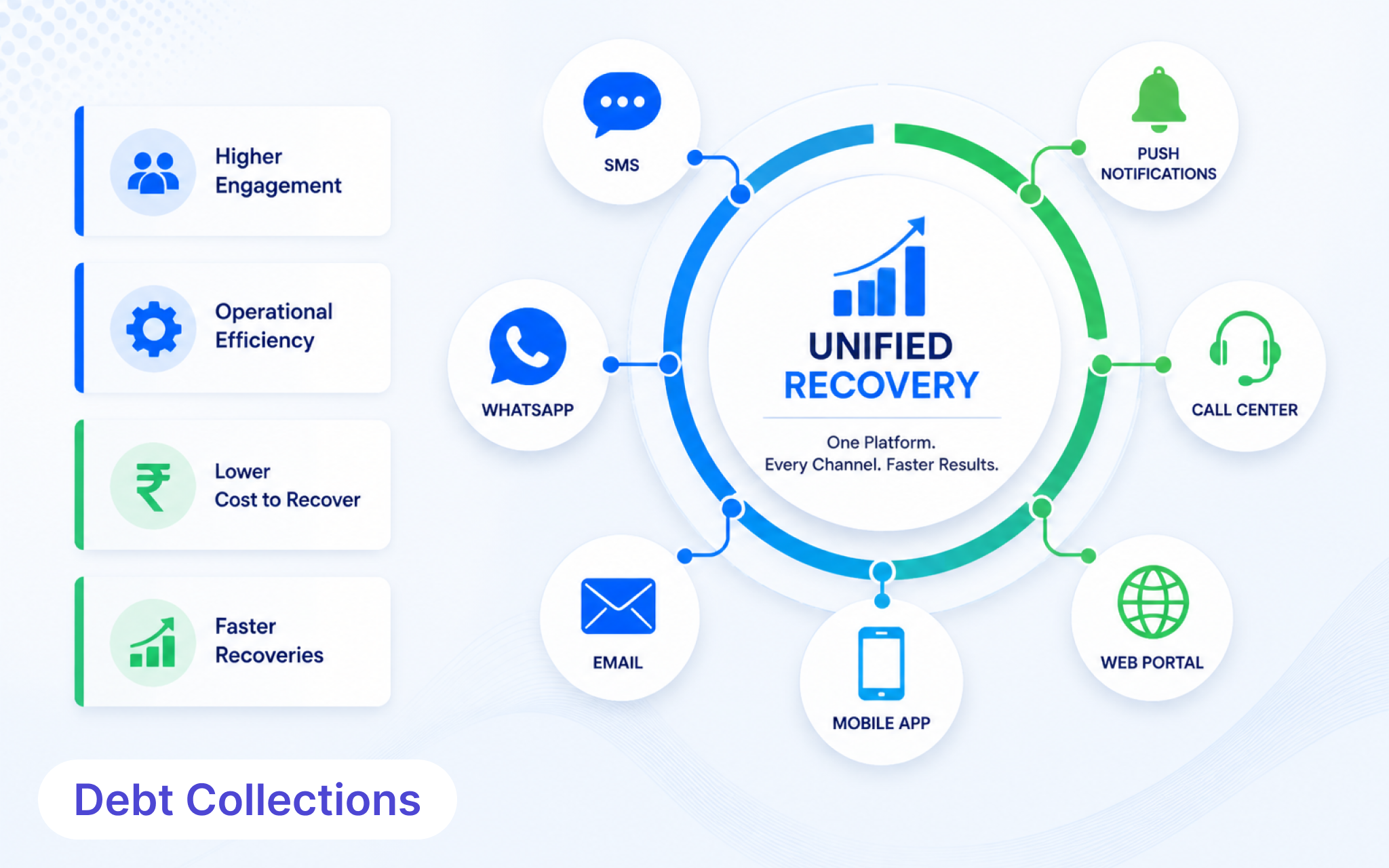
WhatsApp, SMS, email, mobile apps and self-service portals can make repayment reminders, account updates and payment options more accessible.

For example, a lender can structure a sequential omnichannel collection journey:
- Day 1: App notification and SMS
- Day 2: Email with repayment options
- Day 4: WhatsApp reminder and account update
- Day 6: Agent outreach if digital engagement remains low
Within six weeks the organisation reported:
- 27% improvement in recovery rates
- 31% increase in first contact resolution
- 41% reduction in call volumes per account
The lesson is simple.
The most effective collection strategy examples focus on engagement quality rather than outreach volume.
2. Lower Friction and Reduced Operating Costs
Every manual follow up carries a cost.
Calls require agents.
Escalations require supervision.
Disputes consume operational resources.
A well-designed debt recovery process can reduce this burden through workflow automation, self-service options and intelligent escalation.
Key capabilities include:
- Integrated payment links
- Self-service repayment options
- Automated reminders and follow-ups
- Rule-based escalation workflows
- Centralised borrower and interaction visibility
Instead of chasing every borrower manually, institutions focus resources where they generate the highest value.
An Australian fintech lender redesigned its early stage collections journey using automated nudges, digital repayment options, and targeted escalation paths.
The outcome:
- 47% reduction in call volumes
- 22% increase in repayments
- Lower cost per account recovered
This is why operational efficiency has become a critical component of debt recovery for businesses.
3. Better Borrower Experience Creates Long-Term Value
Collections has historically been viewed as a recovery function. Leading institutions increasingly recognise it as an important part of the borrower experience as well.
The tone, timing and relevance of communication influence how borrowers perceive the lender. Traditional recovery models can create frustration through:
- Repetitive outreach
- Generic messaging
- Inconsistent communication
- Poorly timed contact
Omnichannel recovery addresses these issues through personalised and context aware engagement.
Forrester research has shown that organisations delivering consistent cross channel experiences significantly outperform those relying on isolated customer interactions.
A global bank redesigned its collections communication strategy around personalised messaging and structured digital engagement.
Results included:
- Higher email engagement
- Fewer complaints
- Improved audit readiness
- Stronger customer satisfaction outcomes
In today’s environment, protecting borrower relationships is often as important as recovering payments.
Building an Omnichannel Debt Recovery Framework
Successful recovery strategies do not begin with channels.
They begin with intelligence.
Step 1: Start with Data
The strongest debt recovery strategies analyse:
- Borrower engagement behaviour
- Preferred communication channels
- Repayment patterns
- Response timing
- Previous collection outcomes
These insights help lenders design recovery journeys based on borrower behaviour rather than relying on a standard communication sequence.
Step 2: Segment Before You Engage
Not every borrower requires the same treatment.
Low-risk borrowers may respond to digital reminders and self-service repayment options, while higher-risk or repeatedly delinquent accounts may require earlier human intervention.
Segmentation helps lenders determine the appropriate communication channel, timing and level of intervention for each borrower.
Step 3: Eliminate Fragmentation
Many collection teams still operate across disconnected systems.
This integration should also extend to field collection operations. Field agents should have access to relevant borrower information, repayment status and previous interaction history when accounts are assigned for visits. Visit records, payment updates and collection outcomes should then feed back into the central system, allowing collection teams to coordinate subsequent actions across digital and field channels.
Communication tools, payment systems, borrower records and escalation workflows often function independently, making it difficult to maintain a consistent view of borrower interactions.
A unified platform connects these workflows, improves operational visibility and helps collection teams coordinate communication and recovery actions more effectively.
Step 4: Continuously Measure Performance
The effectiveness of an omnichannel collections strategy should be measured beyond recovery rates alone.

High performing lenders monitor:
- Engagement rates
- Repayment conversion
- Channel effectiveness
- Escalation ratios
- Cost to recover
These metrics help organisations optimise quickly and continuously improve outcomes.
A large NBFC operating across multiple markets redesigned its omnichannel framework using behavioural segmentation, channel optimisation, and continuous performance monitoring.
Without increasing headcount, the institution achieved a 10% improvement in recoveries simply by improving orchestration and communication design.
The Future of Collections Is Orchestration, Not Persistence
The economics of collections are changing.
Success is no longer determined by the number of calls placed or reminders sent.
It is determined by how intelligently institutions engage borrowers, automate decisions, and adapt to changing behaviour.
Modern collections require connected systems that combine communication, payments, analytics, decisioning, and workflow automation into a single operating model.
This is where platforms such as Collect.ezee fit into the conversation. By bringing together AI powered automation, omnichannel engagement, workflow orchestration, borrower intelligence, and analytics driven decisioning, ezee.ai enables lenders to modernise the debt recovery process without adding operational complexity.
The strongest recovery organisations are no longer chasing harder.
They are orchestrating smarter.
And as borrower expectations continue to evolve, that difference will increasingly determine who recovers faster, operates more efficiently, and builds stronger customer relationships over the long term.
Frequently Asked Questions
Businesses can automate debt recovery by configuring workflows that coordinate reminders, digital communication, payment options, prioritization, and escalation across channels. By connecting borrower interactions and collection workflows, lenders can reduce manual follow-ups and route cases to the appropriate digital or human intervention based on borrower behaviour.
Omnichannel collections can help improve cash flow by making repayment communication more timely and convenient across channels. Coordinated reminders, self-service payment options, and appropriate escalation can reduce delays in borrower responses and help collection teams focus on accounts that require additional intervention.
Digital debt collection commonly uses SMS, WhatsApp, email, mobile apps, web portals, voice calls and IVR. An omnichannel approach connects these channels so that each interaction is informed by previous borrower responses and collection activity.
Effective omnichannel debt recovery strategies combine borrower segmentation, coordinated communication, convenient repayment options, workflow automation, and behaviour-based escalation. The objective is to determine the appropriate channel, timing, and level of intervention for each borrower rather than relying on repeated outreach through a single channel.
Businesses should evaluate an omnichannel collections platform based on its ability to connect communication channels, borrower data, payment journeys, segmentation, workflow automation, escalation, and performance analytics. They should also consider integration requirements, operational visibility, compliance needs, reporting capabilities, scalability, and the ability to measure recovery performance across channels.
These platforms use information such as repayment status, previous interactions, borrower responses and engagement patterns to determine the next communication or escalation. This helps lenders coordinate follow-ups across channels while maintaining a connected record of borrower interactions.
Collection teams should monitor recovery rates, repayment conversion, engagement rates, promise-to-pay fulfilment, channel effectiveness, escalation ratios, delinquency ageing and cost to recover. Dashboards and automated reporting help identify performance gaps and refine collection strategies.
